Table of contents
**Updates**
We updated this drug summary on 3rd March 2024, adding simple summary cards, removed TLDR section, and condensed longer paragraphs into summary points to improve readability.
What is simvastatin used for?
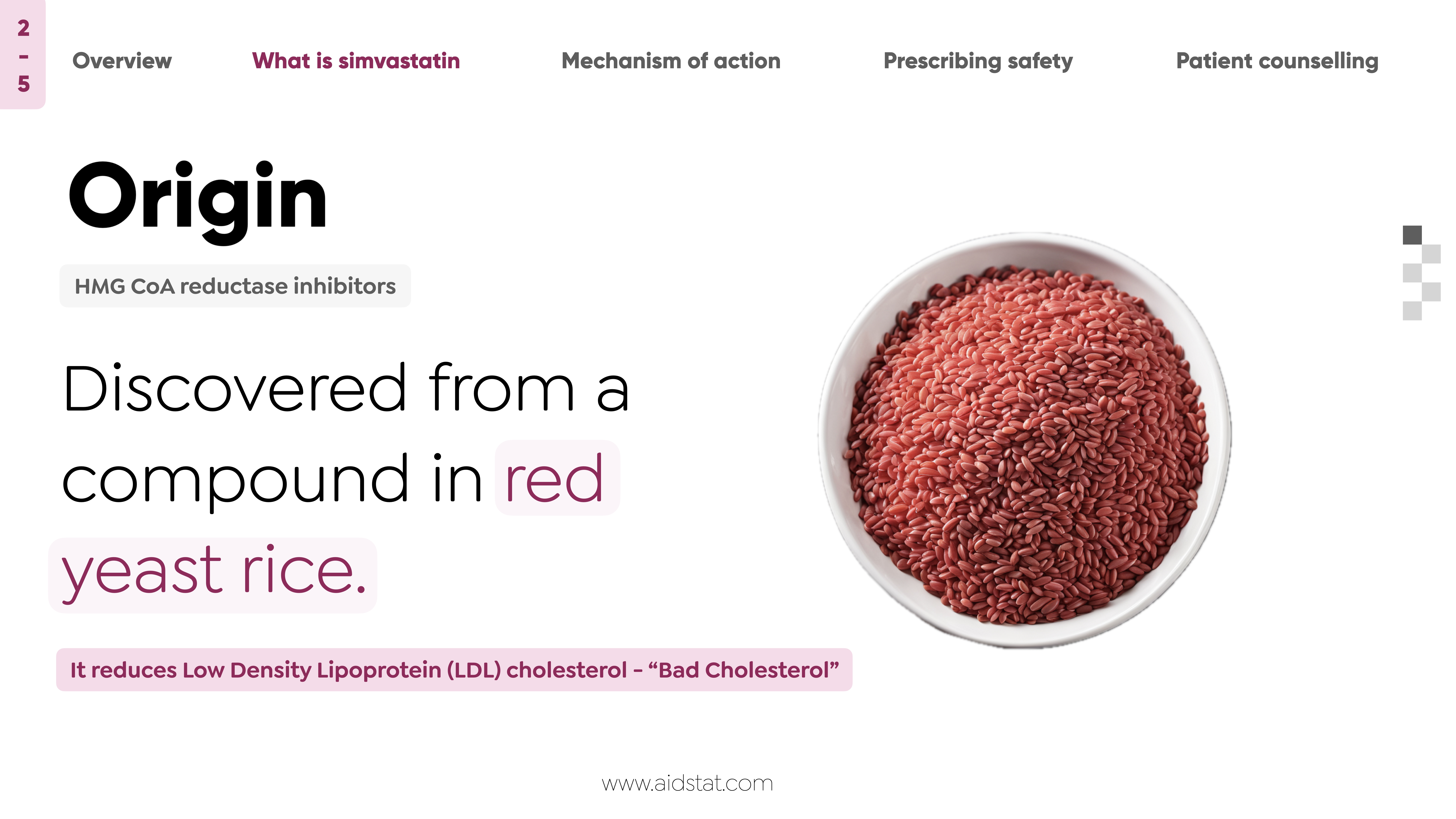
Origin of simvastatin
It was discovered in 1980 from a compound in red yeast rice.
Simvastatin drug class
Belongs to HMG CoA reductase inhibitors or statins
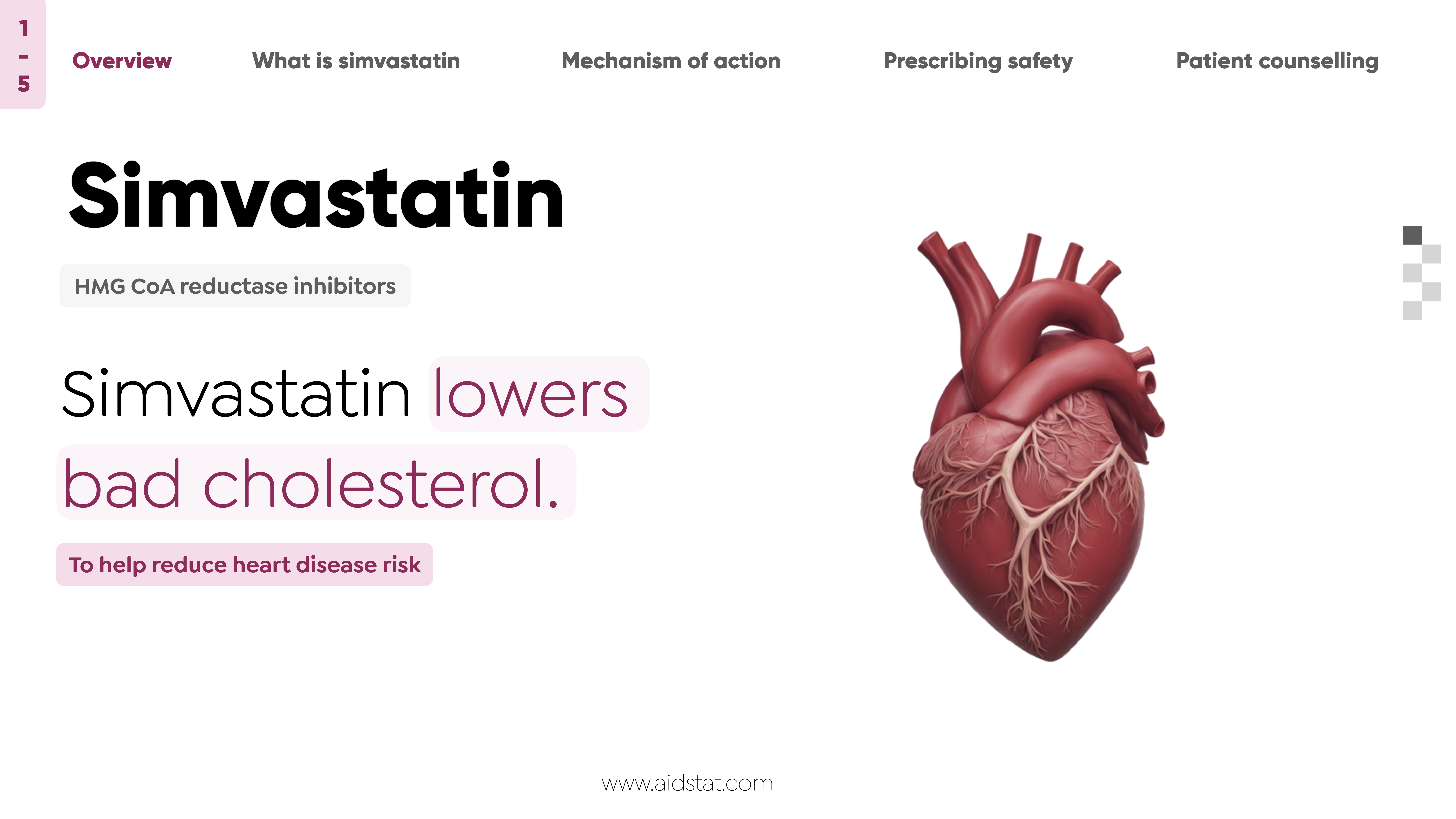
Lowers "bad" cholesterol
Simvastatin is a drug that lowers "bad" cholesterol (LDL) to prevent heart disease.
Reduces heart disease risk
By decreasing cholesterol produced by the liver, simvastatin reduces heart disease risk which helps to prevent stroke and heart attacks.
What is the mechanism of action and duration of effect for simvastatin?
How does simvastatin work?
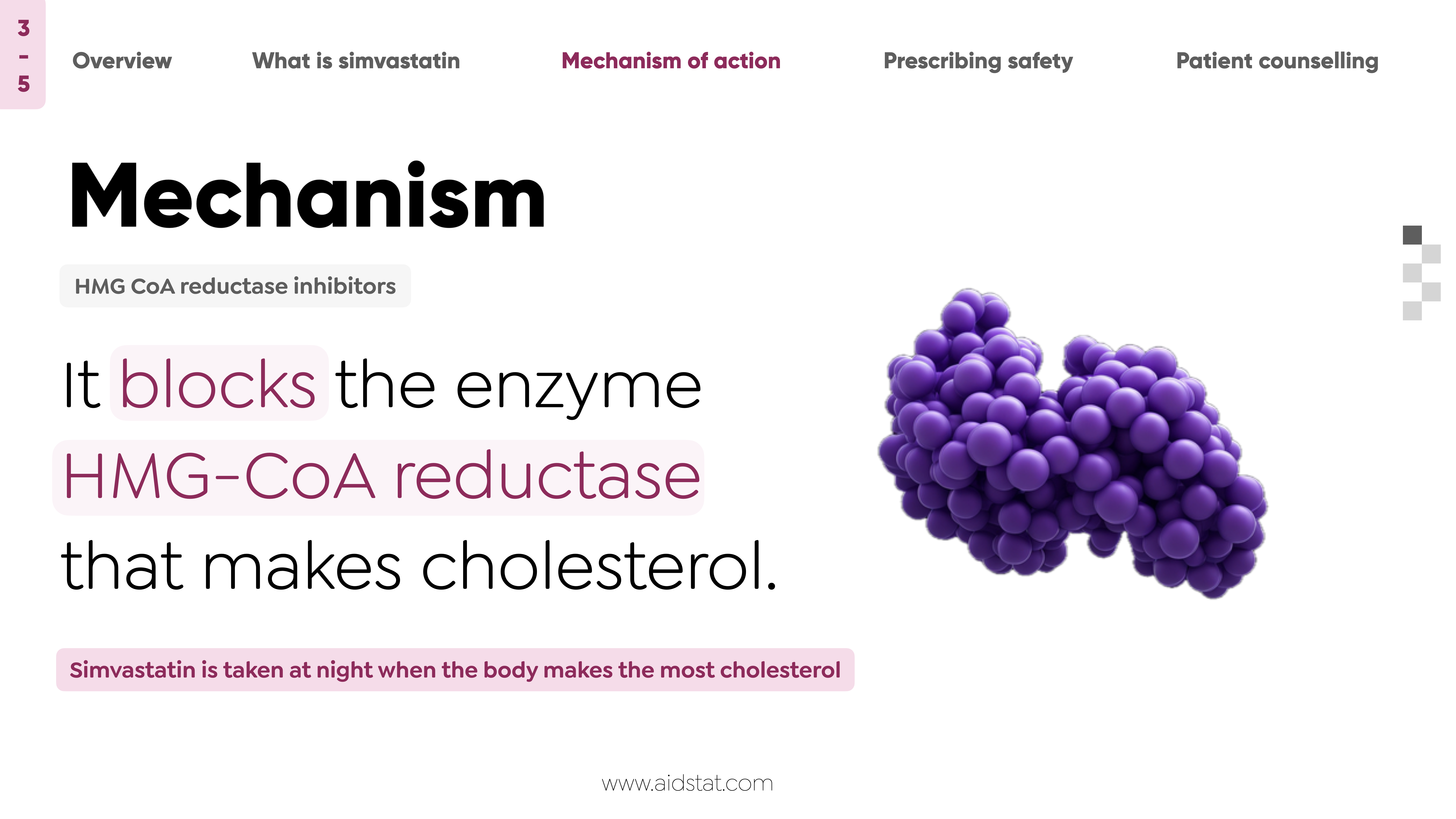
Simvastatin works by blocking an enzyme (HMG-CoA reductase) that makes cholesterol.
What are the benefits of simvastatin?
Lowering cholesterol helps reduce "bad" LDL and triglycerides while raising "good" HDL.
How long does it take to see effects of simvastatin?
It takes a few weeks to see effects, peaking in 4-6 weeks.
When is it best to take simvastatin?
When taken at night, simvastatin can work even better as it matches the time our bodies make the most cholesterol.
What are the contraindications and Interactions for simvastatin?
Simvastatin and liver disease
Simvastatin can harm the liver in those with active liver disease.
Simvastatin related muscle problems
People with muscle problems may face more issues when taking simvastatin.
Simvastatin in Pregnancy
Pregnant and breastfeeding women should avoid simvastatin due to potential harm to their baby.
Simvastatin drug interactions
When simvastatin is taken with certain antibiotics, antifungals, or grapefruit juice, it can lead to interactions that increase the chance of muscle-related problems and other side-effects.
Important simvastatin prescribing safety information
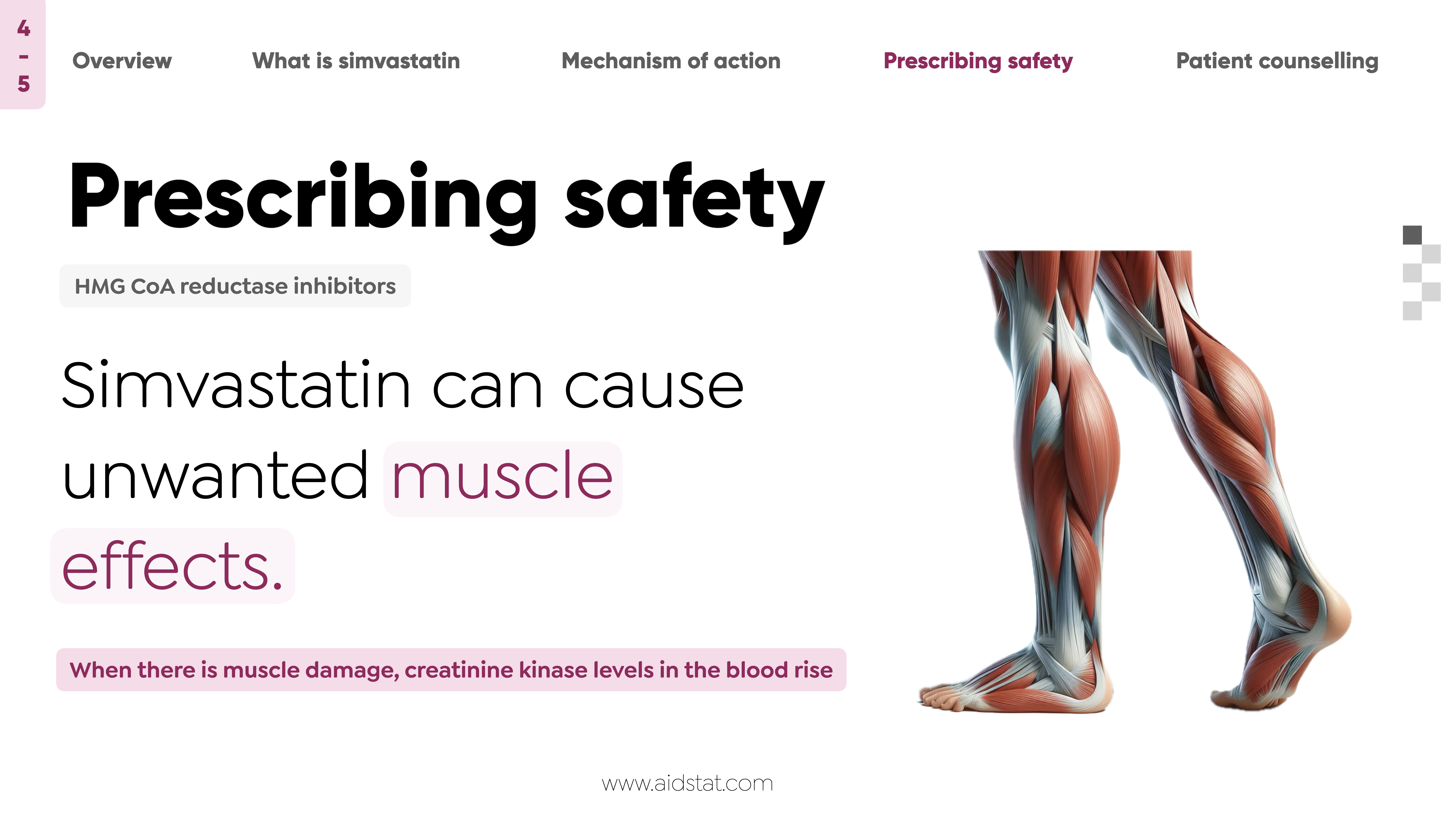
Muscle effects - Especially at high doses, simvastatin can disturb the pathways necessary to produce substances for cell function like muscle integrity. As a result, proteins that help muscles work well might not be made properly.
Checking Creatine Kinase (CK)
CK checks during treatment help detect muscle issues from simvastatin. High CK levels signal possible muscle damage, needing timely monitoring for myopathy care.
Liver Function Tests (LFTs)
LFTS are checked before and during treatment to monitor liver health. Where liver enzyme levels are elevated, prompt action is required and possibly stopping medication if necessary.
Thyroid Function
Thyroid function can change cholesterol levels in the body. If the thyroid isn't working well, this will need to be addressed first before starting statins.
Risk of Myasthenia Gravis
Statins may affect myasthenia gravis, but we don't fully understand how yet. They could change immune reactions linked to this disease, affecting how muscles work and produce energy, causing weakness and fatigue.
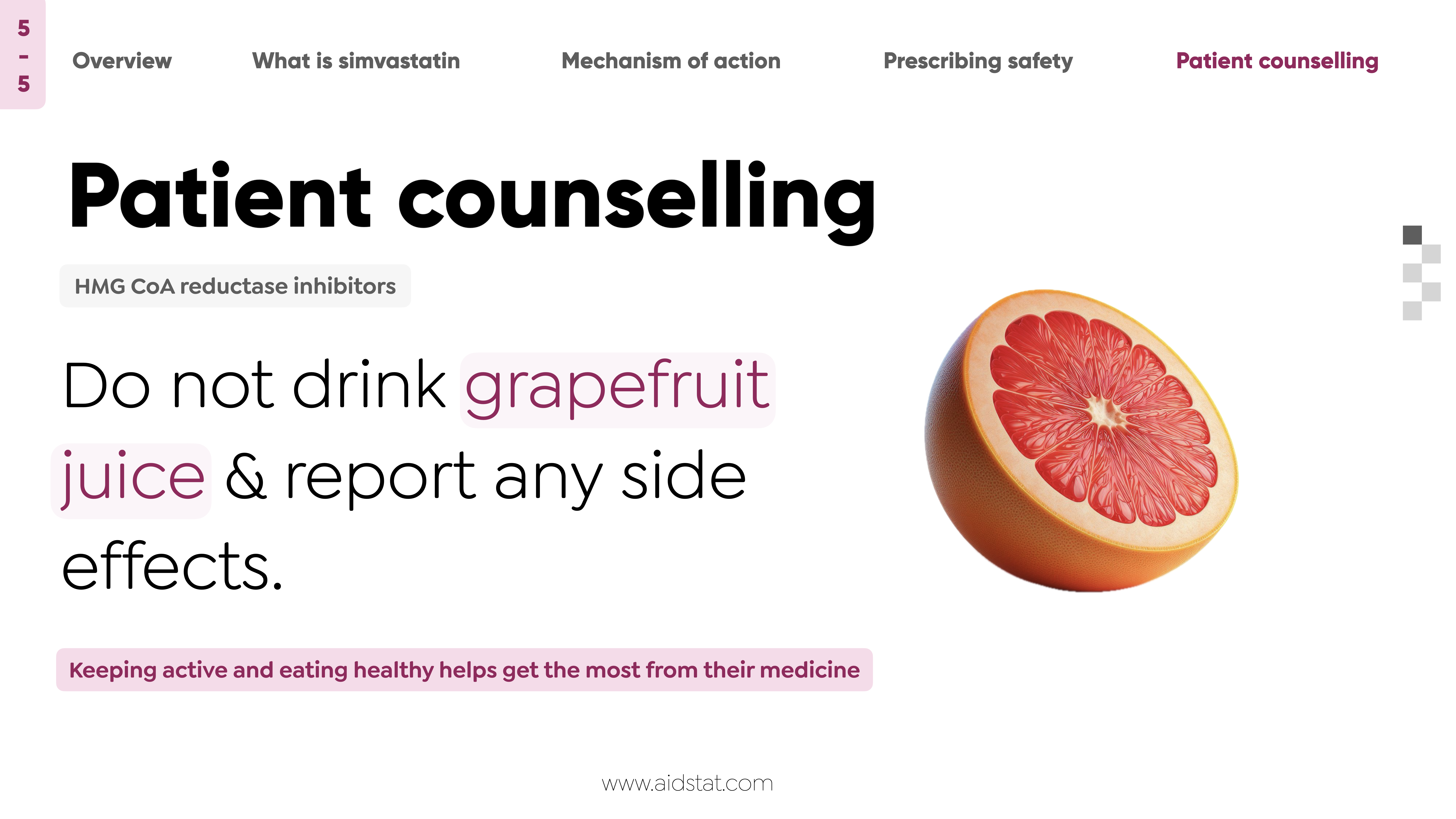
Simvastatin patient counselling and lifestyle advice
Follow advise from prescriber
To help their medicine work well, patients should follow advice from their doctor when taking simvastatin.
Keep up with routine check-ups
Keeping up with check-ups is important to see how well the medicine is working and to deal with any side effects.
Eat well and stay active
Eating healthy, being active, staying at a good weight, and not smoking or drinking too much can also help keep the heart healthy.
Avoid grapefruit juice
Patients should avoid drinking grapefruit juice and report any strange symptoms or side effects while taking simvastatin.
References
1. Hajar, R. (2011). Statins: past and Present. Heart Views, [online] 12(3), p.121. doi:https://doi.org/10.4103/1995-705x.95070. Link
2. Hirota, T., Fujita, Y. and Ieiri, I. (2020). An Updated Review of Pharmacokinetic Drug Interactions and Pharmacogenetics of Statins. Expert Opinion on Drug Metabolism & Toxicology, 16(9), pp.1–14. doi:https://doi.org/10.1080/17425255.2020.1801634. Link
3. Lennernäs, H. and Fager, G. (1997). Pharmacodynamics and Pharmacokinetics of the HMG-CoA Reductase Inhibitors. Clinical Pharmacokinetics, 32(5), pp.403–425. doi:https://doi.org/10.2165/00003088-199732050-00005. Link
4. Lilja, J.J., Kivistö, K.T. and Neuvonen, P.J. (1998). Grapefruit Juice—simvastatin interaction: Effect on Serum Concentrations of simvastatin, Simvastatin acid, and HMG-CoA Reductase inhibitors*. Clinical Pharmacology & Therapeutics, 64(5), pp.477–483. doi:https://doi.org/10.1016/s0009-9236(98)90130-8. Link
5. Navab, M., Reddy, S.T., Van Lenten, B.J. and Fogelman, A.M. (2011). HDL and Cardiovascular disease: Atherogenic and Atheroprotective Mechanisms. Nature Reviews Cardiology, [online] 8(4), pp.222–232. doi:https://doi.org/10.1038/nrcardio.2010.222. Link
6. Sheikh, S., Alvi, U., Soliven, B. and Rezania, K. (2021). Drugs That Induce or Cause Deterioration of Myasthenia Gravis: an Update. Journal of Clinical Medicine, [online] 10(7), p.1537. doi:https://doi.org/10.3390/jcm10071537. Link
7. Stancu, C. and Sima, A. (2001). Statins: Mechanism of Action and Effects. Journal of Cellular and Molecular Medicine, [online] 5(4), pp.378–387. doi:https://doi.org/10.1111/j.1582-4934.2001.tb00172.x. Link
2. Hirota, T., Fujita, Y. and Ieiri, I. (2020). An Updated Review of Pharmacokinetic Drug Interactions and Pharmacogenetics of Statins. Expert Opinion on Drug Metabolism & Toxicology, 16(9), pp.1–14. doi:https://doi.org/10.1080/17425255.2020.1801634. Link
3. Lennernäs, H. and Fager, G. (1997). Pharmacodynamics and Pharmacokinetics of the HMG-CoA Reductase Inhibitors. Clinical Pharmacokinetics, 32(5), pp.403–425. doi:https://doi.org/10.2165/00003088-199732050-00005. Link
4. Lilja, J.J., Kivistö, K.T. and Neuvonen, P.J. (1998). Grapefruit Juice—simvastatin interaction: Effect on Serum Concentrations of simvastatin, Simvastatin acid, and HMG-CoA Reductase inhibitors*. Clinical Pharmacology & Therapeutics, 64(5), pp.477–483. doi:https://doi.org/10.1016/s0009-9236(98)90130-8. Link
5. Navab, M., Reddy, S.T., Van Lenten, B.J. and Fogelman, A.M. (2011). HDL and Cardiovascular disease: Atherogenic and Atheroprotective Mechanisms. Nature Reviews Cardiology, [online] 8(4), pp.222–232. doi:https://doi.org/10.1038/nrcardio.2010.222. Link
6. Sheikh, S., Alvi, U., Soliven, B. and Rezania, K. (2021). Drugs That Induce or Cause Deterioration of Myasthenia Gravis: an Update. Journal of Clinical Medicine, [online] 10(7), p.1537. doi:https://doi.org/10.3390/jcm10071537. Link
7. Stancu, C. and Sima, A. (2001). Statins: Mechanism of Action and Effects. Journal of Cellular and Molecular Medicine, [online] 5(4), pp.378–387. doi:https://doi.org/10.1111/j.1582-4934.2001.tb00172.x. Link